
SHAOLIN TAI CHI
Shaolin Rou Quan means “Soft Fist” and belongs to the internal martial arts. It was only released to the public by the Shaolin Temple a few years ago. Shaolin Tai Chi Rou Quan is the art of relaxation. It is a spiral-like movement based on traditional Chinese philosophy. The Rou Quan exercises strengthen the back muscles and relieve the spine. In addition, deep abdominal breathing is taught, which has a positive effect on the circulatory and nervous systems.
In Rou Quan, health is the main priority. This martial art, with its soft and flowing movements, is suitable for anyone who wants to reduce stress in everyday life, as well as for older people and those who are physically weakened. The gentle and dynamic movement sequences arise from the power of the inner center and promote the balance of Yin and Yang. Through the supple and flowing exercises, Qi is cultivated and overall mobility is improved.
SHAOLIN TAI CHI
Shaolin Rou Quan means “Soft Fist” and belongs to the internal martial arts. It was only released to the public by the Shaolin Temple a few years ago. Shaolin Tai Chi Rou Quan is the art of relaxation. It is a spiral-like movement based on traditional Chinese philosophy. The Rou Quan exercises strengthen the back muscles and relieve the spine. In addition, deep abdominal breathing is taught, which has a positive effect on the circulatory and nervous systems.
In Rou Quan, health is the main priority. This martial art, with its soft and flowing movements, is suitable for anyone who wants to reduce stress in everyday life, as well as for older people and those who are physically weakened. The gentle and dynamic movement sequences arise from the power of the inner center and promote the balance of Yin and Yang. Through the supple and flowing exercises, Qi is cultivated and overall mobility is improved.
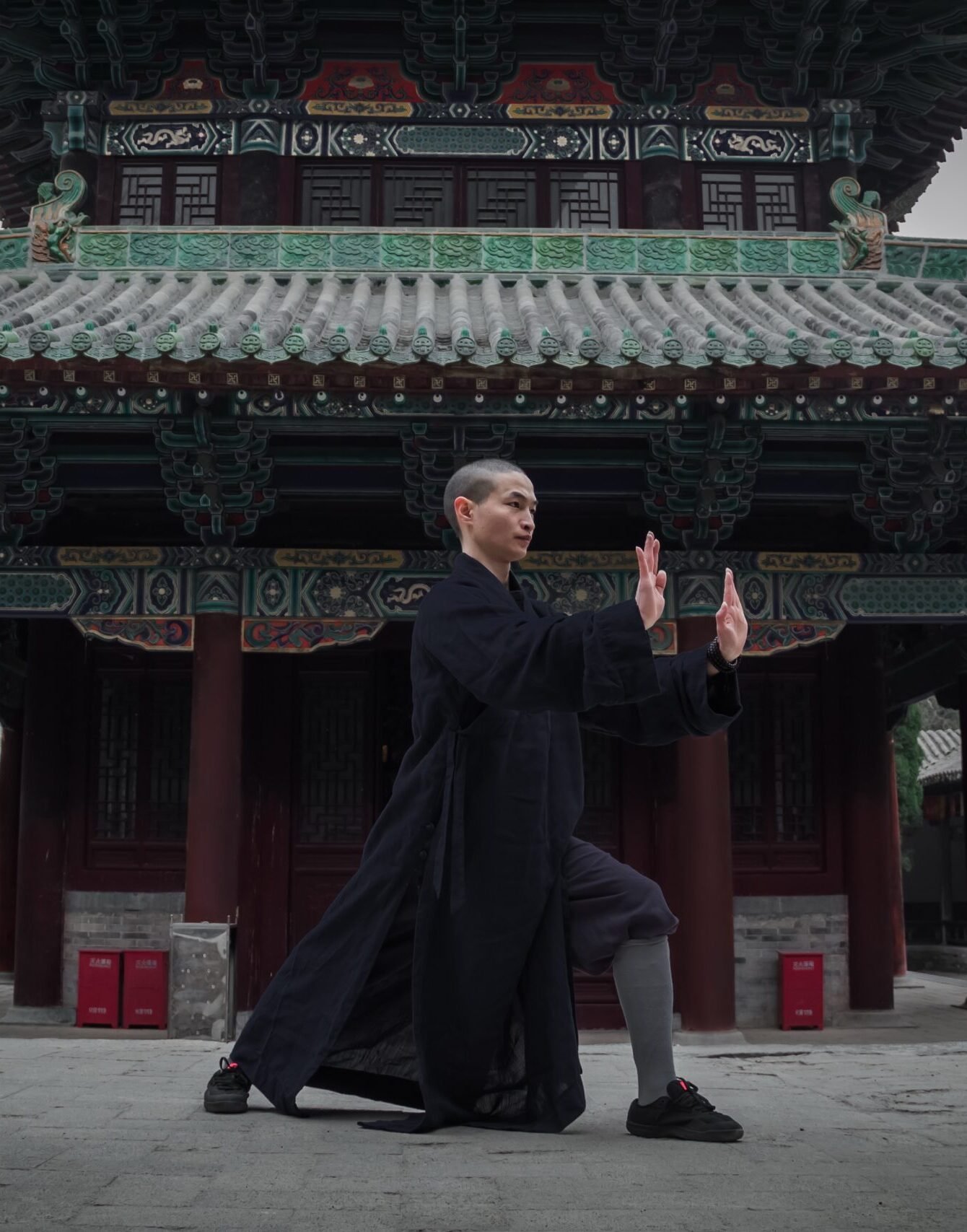
Rou Quan I
少林柔拳拳谱
Traditional guide to the first form of Shaolin Rouquan
1. 罗汉礼佛 – The Arhat bows to Buddha
(“Arhat” means “the Worthy” and refers to a fully accomplished Buddhist saint who has attained Nirvana and will no longer be reborn.)
2. 青龙搅水 – The azure dragon stirs the water
3. 千斤坠肘 – A Thousand pounds sink into the elbows
4. 怀中抱月 – Embracing the moon at the center of the chest
5. 双手推门 – Pushing open the gates with both hands
6. 转身掠手 – Turning the body and redirecting the hands (to deflect an attack)
7. 弓步崩手 – In Gongbu (“Bow Stance”), pushing the opponent away with the hands
8. 双手推门 – Pushing open the gates with both hands
9. 歇步抢手 – In Xiebu (“Resting Stance”), striking forward with the fingertips
10. 金鸡独立 – The golden rooster stands on one Leg
11. 弓步斜形 – Gongbu in a slanted posture
12. 歇步抢手 – In Xiebu, striking forward with the fingertips
13. 金鸡独立 – The golden rooster stands on one Leg
14. 弓步斜形 – Gongbu in a slanted posture
15. 猛虎出洞 – The fierce tiger leaves its cave
16. 罗汉睡觉 – The Arhat sleeps
17. 双关铁门 – The two iron gates close
18. 二郎担山 – The young man carries a mountain on his shoulders
19. 弓步扳手 – In Gongbu, striking with the back of the hands
20. 罗汉云手 – The cloud hands of the Arhat
21. 弓步扳手 – In Gongbu, Striking with the back of the hands
22. 海底插针 – Placing a needle at the bottom of the sea
23. 罗汉架打 – The Arhat guards against an incoming attack
24. 马步栽拳 – In Mabu (“Horse Stance”), striking downward with the fist
25. 罗汉睡觉 – The Arhat sleeps
26. 腰子翻身 – Turning the body like a crane
27. 弓步推掌 – In Gongbu, Striking forward with the edges of the palms
28. 单手打门 – Striking the gate with one hand
29. 弓步崩手 – In Gongbu, pushing the opponent away with the hands
30. 双手推门 – Pushing open the gates with both hands
31. 金刚护身 – The Arhat protects his body
32. 双手摸鱼 – Catching a fish with both hands
33. 罗汉看门 – The Arhat guards the gate
34. 上步两掌 – Stepping forward and striking with the palm-edge
35. 童子拜佛 – The child pays respect to Buddha
36. 罗汉抖身 – The Arhat moves his body like a wave
37. 五花坐山 – The Arhat stands firm like a mountain
38. 罗汉礼佛 – The Arhat bows to Buddha
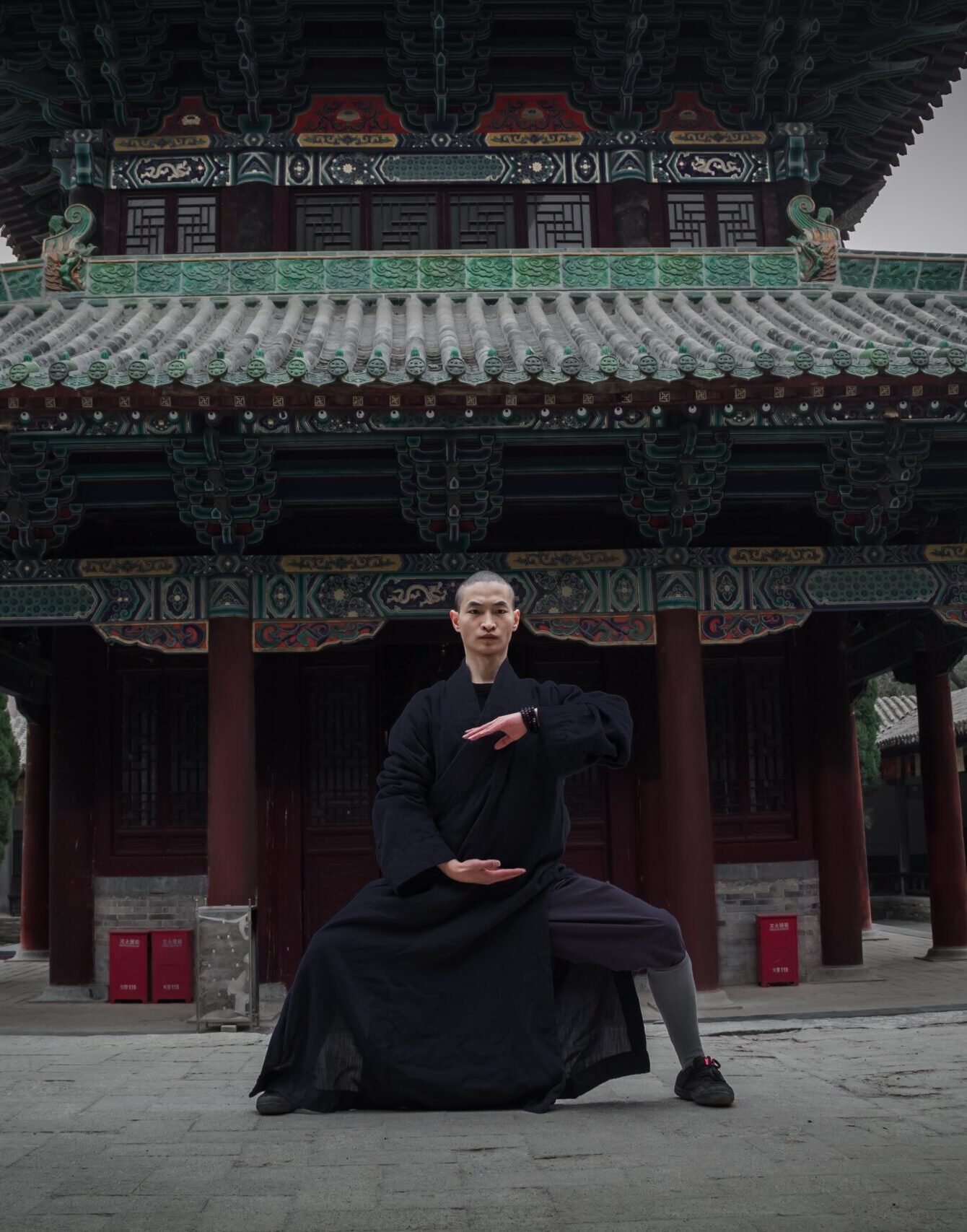
Rou Quan II
少林柔拳二路拳谱
Traditional guide to the second form of Shaolin Rouquan
1. 罗汉礼佛 – The Arhat bows to Buddha
2. 双关铁门 – Closing the iron gate with both hands
3. 怀中抱月 – Embracing the moon with the arms
4. 双手推门 – Pushing open the gates with both hands
5. 转身扳手 – Turning the body and redirecting the opponent with the hands
6. 老僧敬茶 – The elder monk prepares tea
7. 摇身崩手 – Shaking the body and forcefully pushing forward with both hands
8. 双手推门 – Pushing open the gates with both hands
9. 泰山压顶 – Mount Tai presses down from above
10. 金鸡探爪 – The golden rooster stretches out its claws
11. 老僧锄禾 – The elder monk cultivates the field
12. 老树盘根 – The ancient tree extends its twisting roots
13. 窝心一拳 – A punch striking directly to the heart
14. 弓步推掌 – In Gongbu, Striking forward with the edges of the palms
15. 罗汉单云 – The Arhat’s single cloud-Hand (to the right)
16. 老僧照镜 – The elder monk looks into the mirror
17. 弓步推掌 – In Gongbu, Striking forward with the edges of the palms
18. 罗汉洗脸 – The Arhat washes his face
19. 老僧送客 – The elder monk bids farewell to his guests
20. 半步崩拳 – Taking a half step forward and driving the opponent back with both fists
21. 腋下藏花 – Hiding the flowers beneath the arms
22. 昙花一现 – The fleeting ephemeral bloom of the night-flower
23. 老僧抖尘 – The elder monk shakes off the dust
24. 鹞子翻身 – The sparrowhawk turns around
25. 弓步冲拳 – In Gongbu, striking forward with a powerful punch
26. 大鹏展翅 – The Great Roc Peng spreads its wings
27. 老僧扫地 – The elder monk sweeps the ground
28. 退步两掌 – Stepping back and striking forward twice with the palm-edges
29. 罗汉单云 – The Arhat’s single cloud-hand (to the left)
30. 乌龙摆尾 – The black dragon swings its tail
31. 搂膝冲拳 – Protecting the knee and punching forward
32. 马步格挡 – In Mabu, blocking the opponent
33. 倒步插花 – Stepping backwards and placing the flowers down
34. 转身崩拳 – Turning the body and forcefully driving the opponent back with both fists
35. 童子拜佛 – The Child pays respect to Buddha
36. 罗汉撞钟 – The Arhat strikes the bell
37. 五花坐山 – Five Flowers sit upon the mountain
38. 罗汉礼佛 – The Arhat bows to Buddha
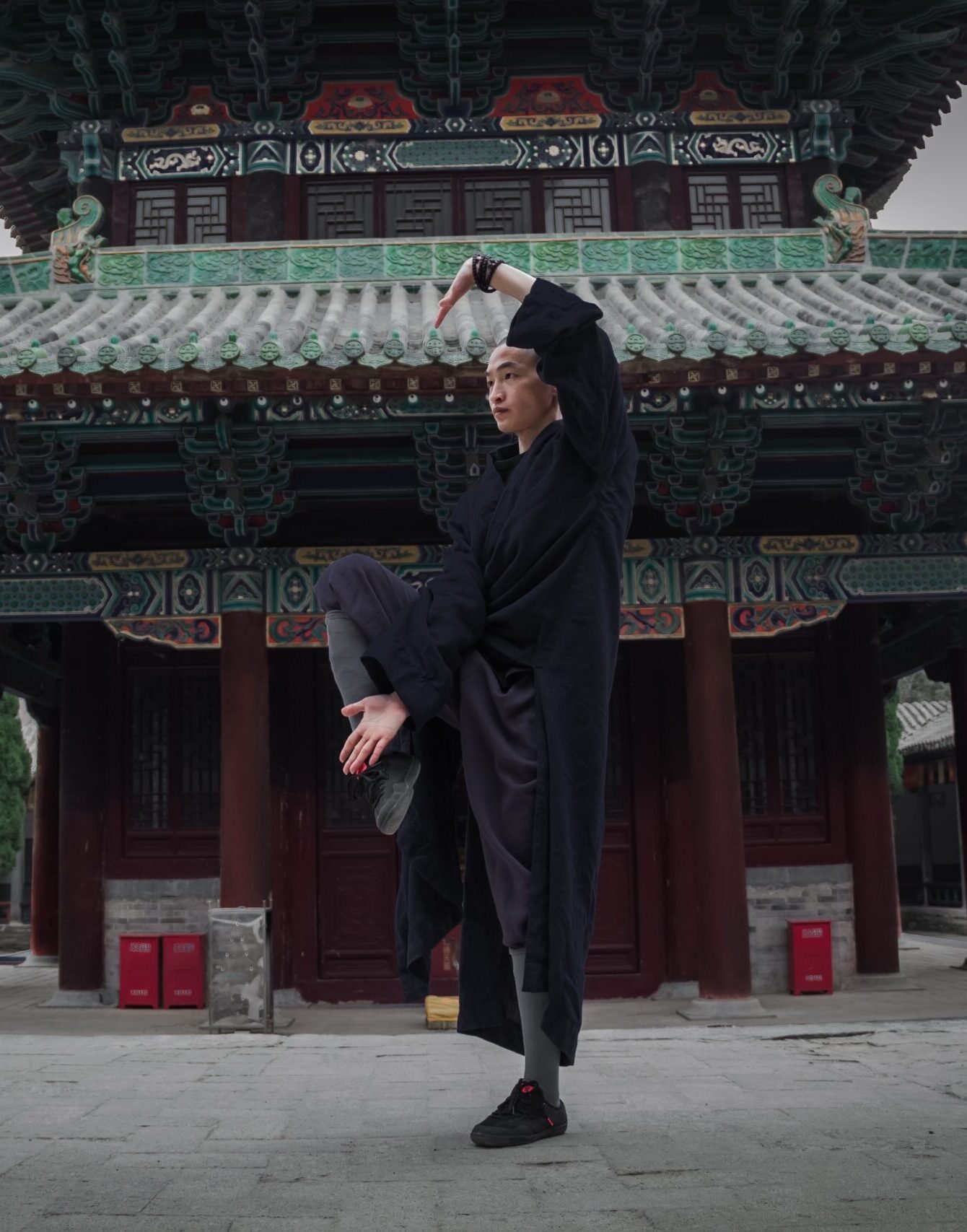
Rou Quan III
少林柔拳三路拳谱
Traditional guide to the third form of Shaolin Rouquan
1. 罗汉礼佛 – The Arhat bows to Buddha
2. 怀中抱月 – Embracing the moon with the arms
3. 双手推门 – Pushing open the gates with both hands
4. 顺手牵羊 – Seizing the advantage and attacking swiftly
5. 提手炮捶 – Lifting the hand with the cannon-fist
6. 金鸡独立 – The golden rooster stands alone
7. 双风贯耳 – Twin winds pierce the ears
8. 老僧锄禾 – The elder monk plows the field
9. 童子献图 – The young boy presents the scroll
10. 泰山压顶 – Mount Tai presses down from above
11. 弓步扳手 – In Gongbu, Pulling and redirecting with the hands
12. 独立抱月 – Standing alone while embracing the moon
13. 二郎担山 – Two men carry the mountain on their shoulders
14. 老僧看门 – The elder monk guards the gate
15. 跟步崩拳 – Stepping forward with an explosive punch
16. 双关铁门 – Closing the iron gate with both hands
17. 罗汉架打 – The Arhats fight
18. 开弓射箭 – Drawing the bow and releasing the arrow
19. 罗汉缩身 – The Arhat shrinks down
20. 鹞子翻身 – The sparrowhawk turns around
21. 弓步盘肘 – In Gongbu, crossing the Elbows
22. 老僧迎客 – The elder monk welcomes his guests
23. 罗汉睡觉 – The Arhat sleeps
24. 老僧送客 – The elder monk sends off his guests
25. 老虎抱头 – The tiger shields its head
26. 罗汉云手 – The cloud hands of the Arhat
27. 大鹏展翅 – The Great Roc Peng spreads its wings
28. 弓步扳手 – In Gongbu, Pulling and redirecting with the hands
29. 泰山压顶 – Mount Tai presses down from above
30. 窝心一锤 – A punch striking directly to the heart
31. 弓步顶肘 – In Gongbu, driving the elbows forward
32. 罗汉睡觉 – The Arhat sleeps
33. 童子献图 – The young boy presents the scroll
34. 泰山压顶 – Mount Tai presses down from above
35. 罗汉撞钟 – The Arhat strikes the bell
36. 猛虎出洞 – The Tiger emerges from the cave
37. 五花坐山 – Five Flowers sit upon the mountain
38. 罗汉礼佛 – The Arhat bows to Buddha
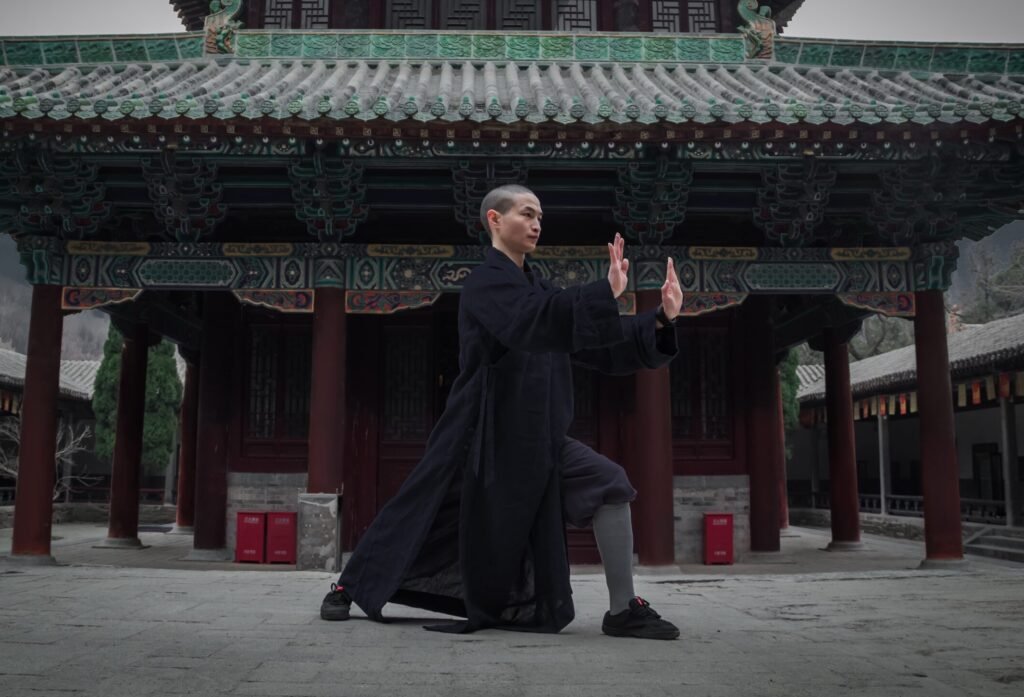
Rou Quan I
少林柔拳拳谱
Traditional guide to the first form of Shaolin Rouquan
1. 罗汉礼佛 – The Arhat bows to Buddha
(“Arhat” means “the Worthy” and refers to a fully accomplished Buddhist saint who has attained Nirvana and will no longer be reborn.)
2. 青龙搅水 – The azure dragon stirs the water
3. 千斤坠肘 – A Thousand pounds sink into the elbows
4. 怀中抱月 – Embracing the moon at the center of the chest
5. 双手推门 – Pushing open the gates with both hands
6. 转身掠手 – Turning the body and redirecting the hands (to deflect an attack)
7. 弓步崩手 – In Gongbu (“Bow Stance”), pushing the opponent away with the hands
8. 双手推门 – Pushing open the gates with both hands
9. 歇步抢手 – In Xiebu (“Resting Stance”), striking forward with the fingertips
10. 金鸡独立 – The golden rooster stands on one Leg
11. 弓步斜形 – Gongbu in a slanted posture
12. 歇步抢手 – In Xiebu, striking forward with the fingertips
13. 金鸡独立 – The golden rooster stands on one Leg
14. 弓步斜形 – Gongbu in a slanted posture
15. 猛虎出洞 – The fierce tiger leaves its cave
16. 罗汉睡觉 – The Arhat sleeps
17. 双关铁门 – The two iron gates close
18. 二郎担山 – The young man carries a mountain on his shoulders
19. 弓步扳手 – In Gongbu, striking with the back of the hands
20. 罗汉云手 – The cloud hands of the Arhat
21. 弓步扳手 – In Gongbu, Striking with the back of the hands
22. 海底插针 – Placing a needle at the bottom of the sea
23. 罗汉架打 – The Arhat guards against an incoming attack
24. 马步栽拳 – In Mabu (“Horse Stance”), striking downward with the fist
25. 罗汉睡觉 – The Arhat sleeps
26. 腰子翻身 – Turning the body like a crane
27. 弓步推掌 – In Gongbu, Striking forward with the edges of the palms
28. 单手打门 – Striking the gate with one hand
29. 弓步崩手 – In Gongbu, pushing the opponent away with the hands
30. 双手推门 – Pushing open the gates with both hands
31. 金刚护身 – The Arhat protects his body
32. 双手摸鱼 – Catching a fish with both hands
33. 罗汉看门 – The Arhat guards the gate
34. 上步两掌 – Stepping forward and striking with the palm-edge
35. 童子拜佛 – The child pays respect to Buddha
36. 罗汉抖身 – The Arhat moves his body like a wave
37. 五花坐山 – The Arhat stands firm like a mountain
38. 罗汉礼佛 – The Arhat bows to Buddha
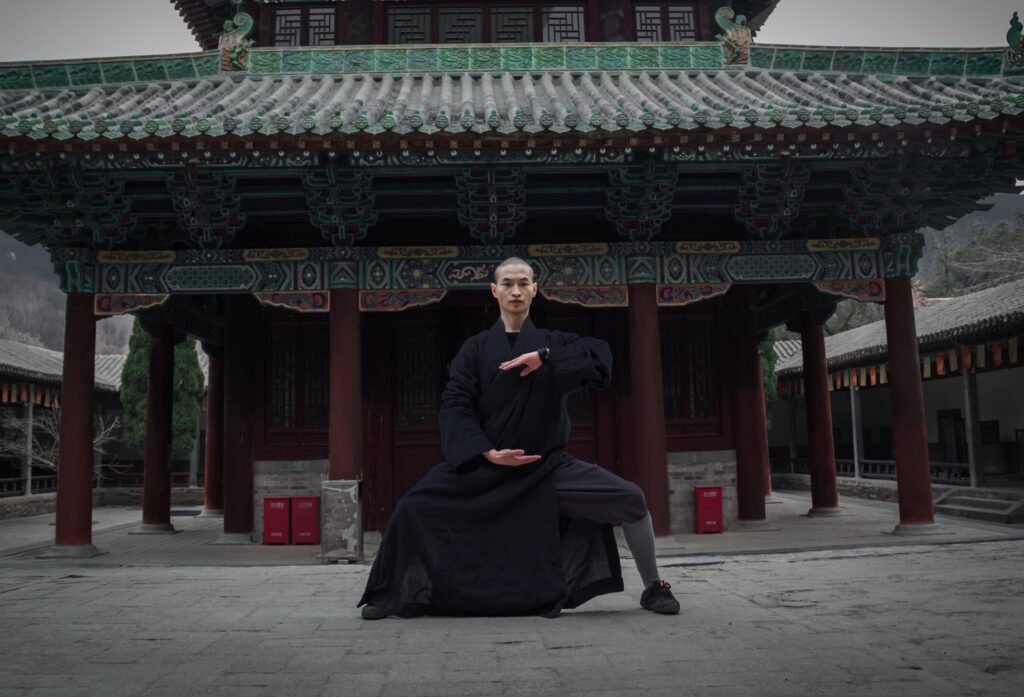
Rou Quan II
少林柔拳二路拳谱
Traditional guide to the second form of Shaolin Rouquan
1. 罗汉礼佛 – The Arhat bows to Buddha
2. 双关铁门 – Closing the iron gate with both hands
3. 怀中抱月 – Embracing the moon with the arms
4. 双手推门 – Pushing open the gates with both hands
5. 转身扳手 – Turning the body and redirecting the opponent with the hands
6. 老僧敬茶 – The elder monk prepares tea
7. 摇身崩手 – Shaking the body and forcefully pushing forward with both hands
8. 双手推门 – Pushing open the gates with both hands
9. 泰山压顶 – Mount Tai presses down from above
10. 金鸡探爪 – The golden rooster stretches out its claws
11. 老僧锄禾 – The elder monk cultivates the field
12. 老树盘根 – The ancient tree extends its twisting roots
13. 窝心一拳 – A punch striking directly to the heart
14. 弓步推掌 – In Gongbu, Striking forward with the edges of the palms
15. 罗汉单云 – The Arhat’s single cloud-Hand (to the right)
16. 老僧照镜 – The elder monk looks into the mirror
17. 弓步推掌 – In Gongbu, Striking forward with the edges of the palms
18. 罗汉洗脸 – The Arhat washes his face
19. 老僧送客 – The elder monk bids farewell to his guests
20. 半步崩拳 – Taking a half step forward and driving the opponent back with both fists
21. 腋下藏花 – Hiding the flowers beneath the arms
22. 昙花一现 – The fleeting ephemeral bloom of the night-flower
23. 老僧抖尘 – The elder monk shakes off the dust
24. 鹞子翻身 – The sparrowhawk turns around
25. 弓步冲拳 – In Gongbu, striking forward with a powerful punch
26. 大鹏展翅 – The Great Roc Peng spreads its wings
27. 老僧扫地 – The elder monk sweeps the ground
28. 退步两掌 – Stepping back and striking forward twice with the palm-edges
29. 罗汉单云 – The Arhat’s single cloud-hand (to the left)
30. 乌龙摆尾 – The black dragon swings its tail
31. 搂膝冲拳 – Protecting the knee and punching forward
32. 马步格挡 – In Mabu, blocking the opponent
33. 倒步插花 – Stepping backwards and placing the flowers down
34. 转身崩拳 – Turning the body and forcefully driving the opponent back with both fists
35. 童子拜佛 – The Child pays respect to Buddha
36. 罗汉撞钟 – The Arhat strikes the bell
37. 五花坐山 – Five Flowers sit upon the mountain
38. 罗汉礼佛 – The Arhat bows to Buddha
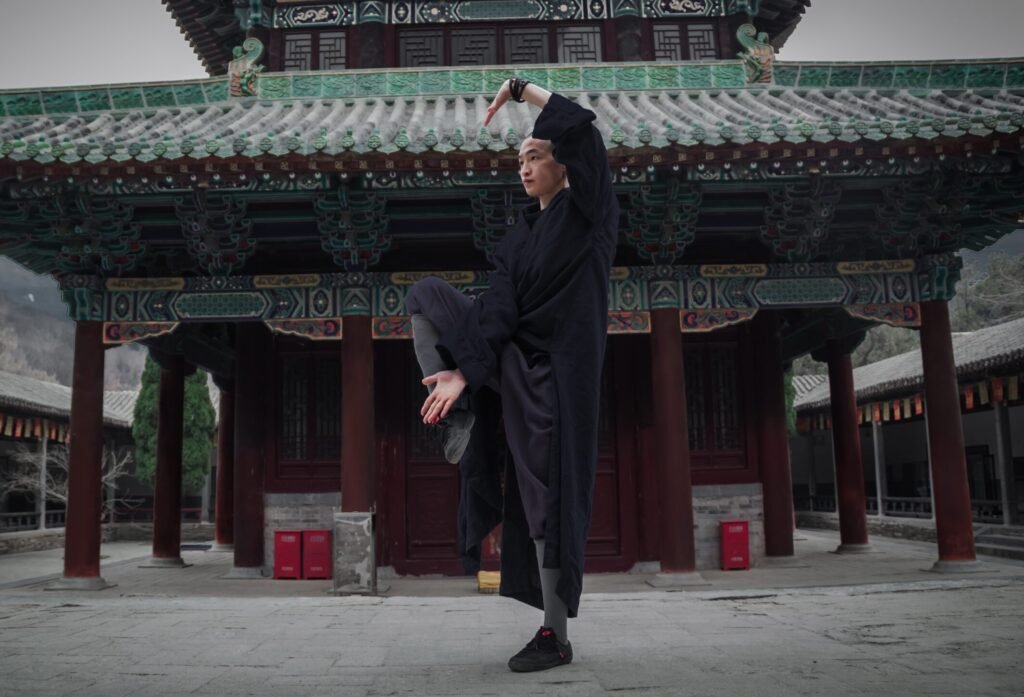
Rou Quan III
少林柔拳三路拳谱
Traditional guide to the third form of Shaolin Rouquan
1. 罗汉礼佛 – The Arhat bows to Buddha
2. 怀中抱月 – Embracing the moon with the arms
3. 双手推门 – Pushing open the gates with both hands
4. 顺手牵羊 – Seizing the advantage and attacking swiftly
5. 提手炮捶 – Lifting the hand with the cannon-fist
6. 金鸡独立 – The golden rooster stands alone
7. 双风贯耳 – Twin winds pierce the ears
8. 老僧锄禾 – The elder monk plows the field
9. 童子献图 – The young boy presents the scroll
10. 泰山压顶 – Mount Tai presses down from above
11. 弓步扳手 – In Gongbu, Pulling and redirecting with the hands
12. 独立抱月 – Standing alone while embracing the moon
13. 二郎担山 – Two men carry the mountain on their shoulders
14. 老僧看门 – The elder monk guards the gate
15. 跟步崩拳 – Stepping forward with an explosive punch
16. 双关铁门 – Closing the iron gate with both hands
17. 罗汉架打 – The Arhats fight
18. 开弓射箭 – Drawing the bow and releasing the arrow
19. 罗汉缩身 – The Arhat shrinks down
20. 鹞子翻身 – The sparrowhawk turns around
21. 弓步盘肘 – In Gongbu, crossing the Elbows
22. 老僧迎客 – The elder monk welcomes his guests
23. 罗汉睡觉 – The Arhat sleeps
24. 老僧送客 – The elder monk sends off his guests
25. 老虎抱头 – The tiger shields its head
26. 罗汉云手 – The cloud hands of the Arhat
27. 大鹏展翅 – The Great Roc Peng spreads its wings
28. 弓步扳手 – In Gongbu, Pulling and redirecting with the hands
29. 泰山压顶 – Mount Tai presses down from above
30. 窝心一锤 – A punch striking directly to the heart
31. 弓步顶肘 – In Gongbu, driving the elbows forward
32. 罗汉睡觉 – The Arhat sleeps
33. 童子献图 – The young boy presents the scroll
34. 泰山压顶 – Mount Tai presses down from above
35. 罗汉撞钟 – The Arhat strikes the bell
36. 猛虎出洞 – The Tiger emerges from the cave
37. 五花坐山 – Five Flowers sit upon the mountain
38. 罗汉礼佛 – The Arhat bows to Buddha
Tai Chi Weapons
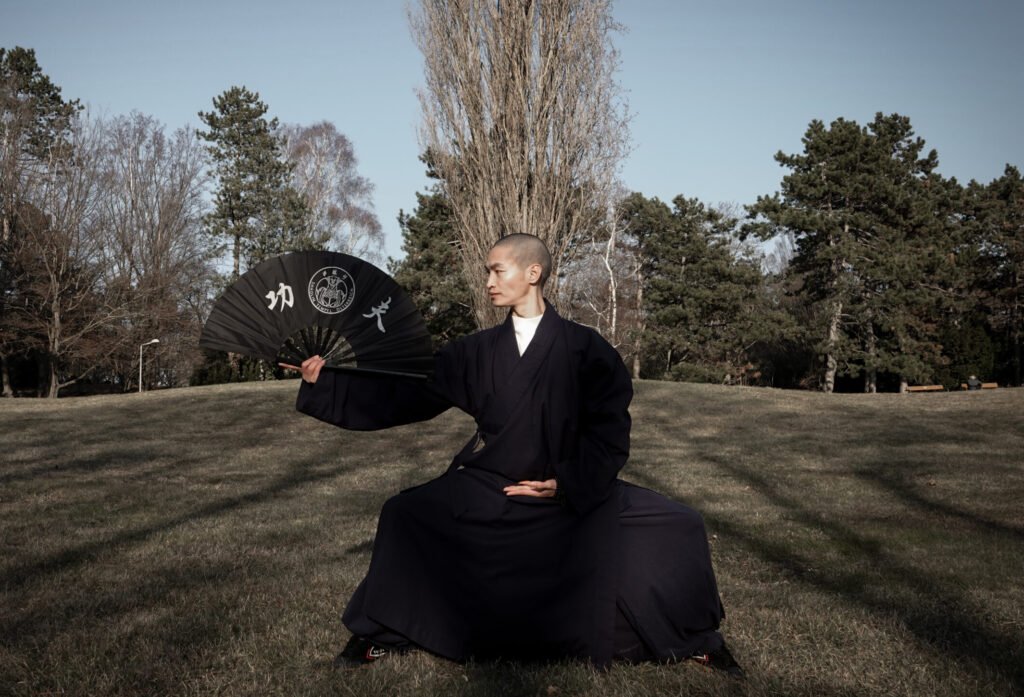
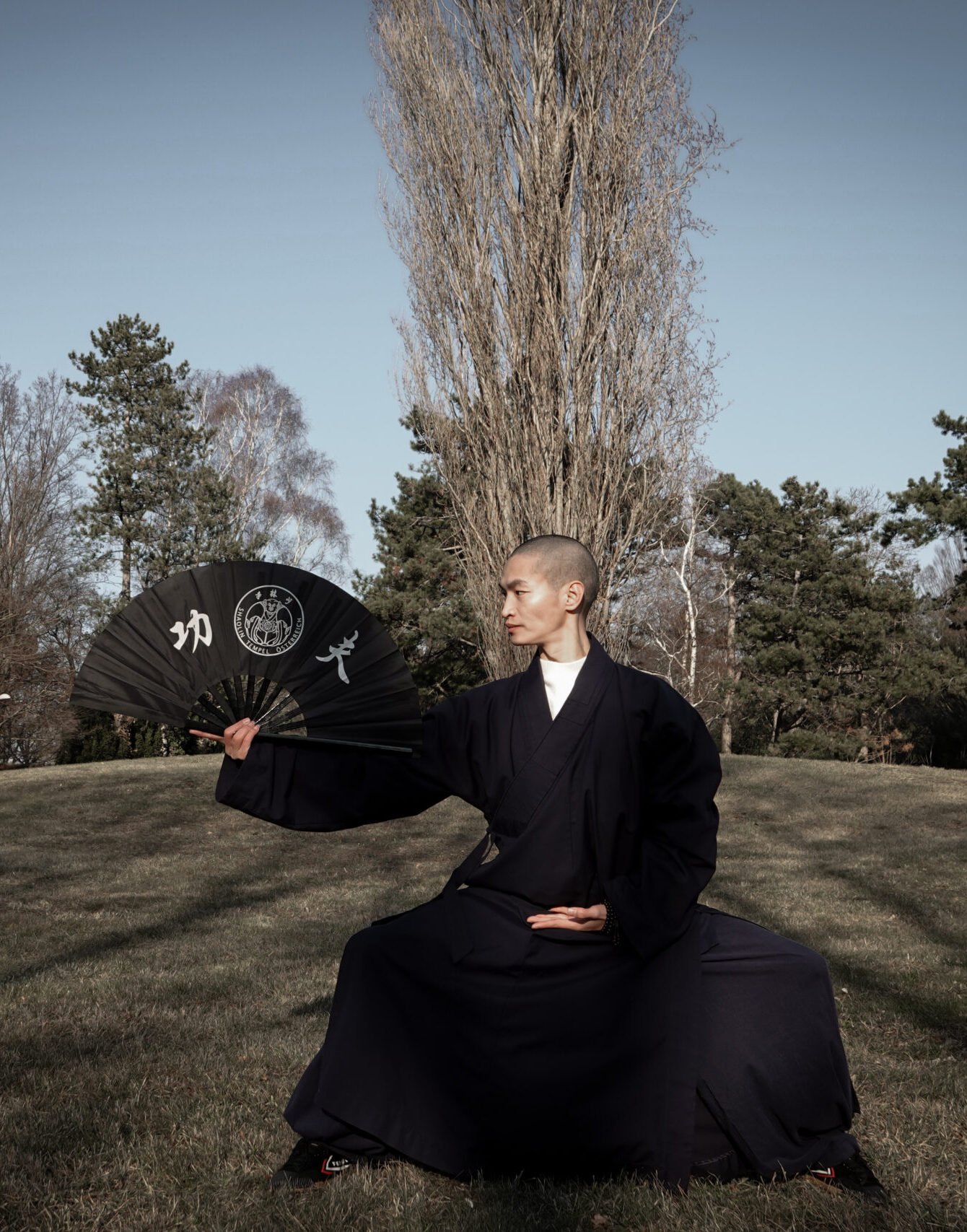
Tai Chi Fan
The Shaolin Kung Fu Fan is a weapon art that harmoniously blends hardness and softness, movement and stillness. It combines the softness, relaxation, smoothness, and harmony of Shaolin Soft Fist Forms with the fan’s agile and ingenious mechanics. The fan can be used for both offense and defense, while also possessing a distinctive aesthetic elegance. The fan opens like a blade, and closes to conceal ist scharpness. Its techniques are highly versatile. Between the opening and closing of the fan, practitioners emphasize the unity of breath and movement. This allows practitioners to adjust their breathing, stretch their muscles and bones, relax their body and mind, cultivate a calm state of mind, and develop a strong will and concentration. As a result, body and mind are harmonized and in balance during the practice of the fan.
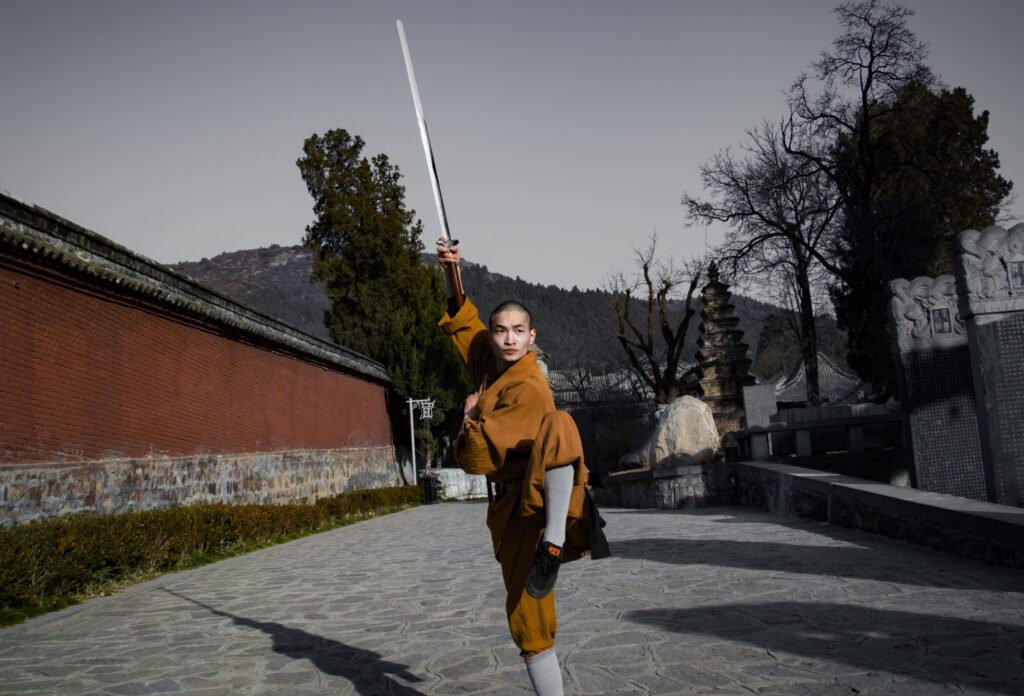
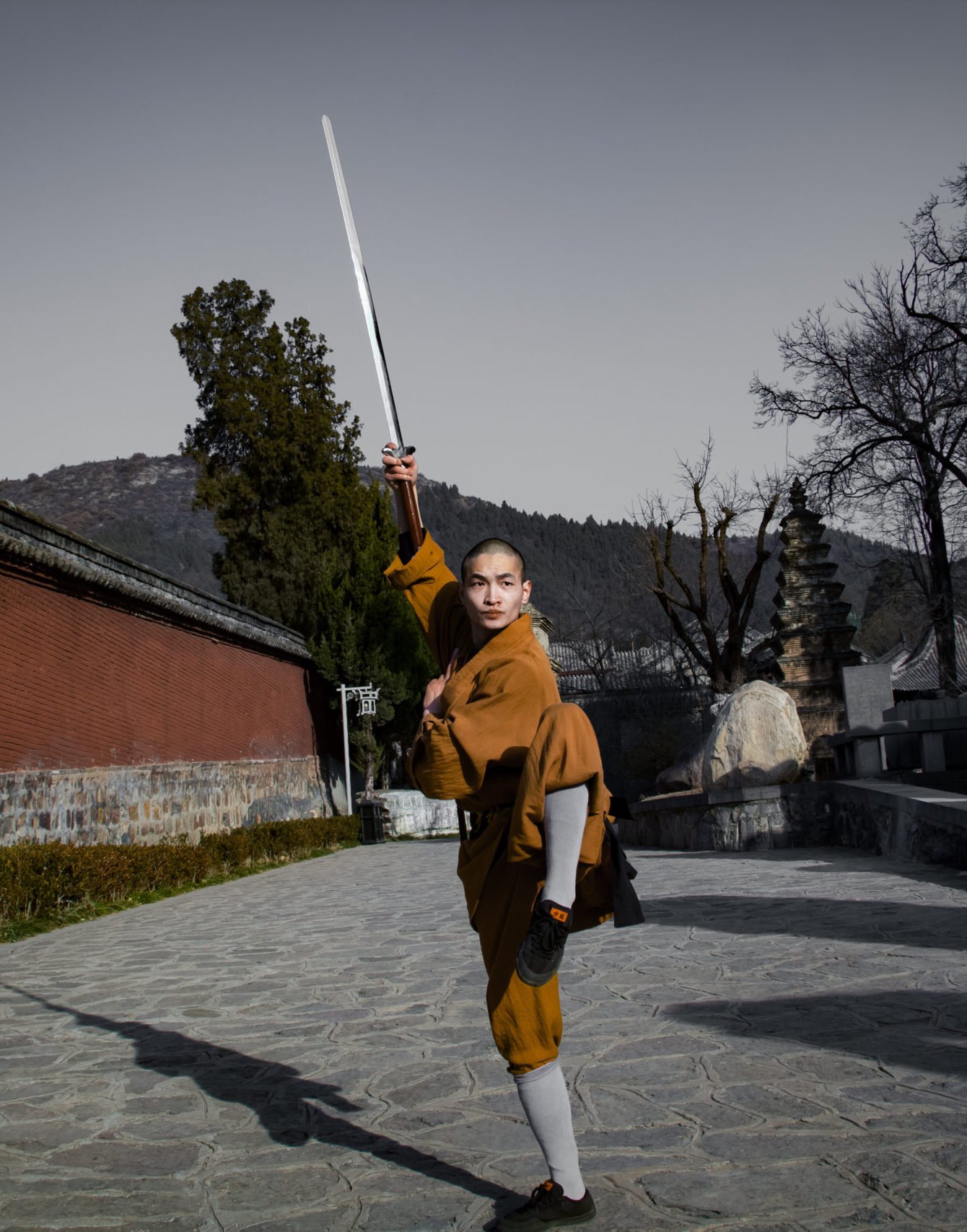
Tai Chi Sword
The Shaolin Kung Fu Sword blends the power and speed of Shaolin Kung Fu with the softness and harmony of Shaolin swordsmanship, and is fluid and graceful. It is a system that unites offensive and defensive skills while also cultivating harmony between body and mind. Its methods emphasize stillness overcoming movement and softness conquering hardness. Moreover, the Shaolin Kung Fu Sword is not only a weapon technique but also a form of internal cultivation of body and mind. During practice, deep breathing, a stable mind, and fluid movements help practitioners enhance their energy, relax their body and mind, release stress, and return to inner tranquility. This facilitates the balance of body and mind, which enhances the circulation of Qi and blood.
Tai Chi Fan
The Shaolin Kung Fu Fan is a weapon art that harmoniously blends hardness and softness, movement and stillness. It combines the softness, relaxation, smoothness, and harmony of Shaolin Soft Fist Forms with the fan’s agile and ingenious mechanics. The fan can be used for both offense and defense, while also possessing a distinctive aesthetic elegance. The fan opens like a blade, and closes to conceal ist scharpness. Its techniques are highly versatile. Between the opening and closing of the fan, practitioners emphasize the unity of breath and movement. This allows practitioners to adjust their breathing, stretch their muscles and bones, relax their body and mind, cultivate a calm state of mind, and develop a strong will and concentration. As a result, body and mind are harmonized and in balance during the practice of the fan.
Tai Chi Sword
The Shaolin Kung Fu Sword blends the power and speed of Shaolin Kung Fu with the softness and harmony of Shaolin swordsmanship, and is fluid and graceful. It is a system that unites offensive and defensive skills while also cultivating harmony between body and mind. Its methods emphasize stillness overcoming movement and softness conquering hardness. Moreover, the Shaolin Kung Fu Sword is not only a weapon technique but also a form of internal cultivation of body and mind. During practice, deep breathing, a stable mind, and fluid movements help practitioners enhance their energy, relax their body and mind, release stress, and return to inner tranquility. This facilitates the balance of body and mind, which enhances the circulation of Qi and blood.

Shaolin Mian Quan
Shaolin Mian Quan (“Soft fist”) is part of the internal martial arts of Shaolin Kung Fu. It combines practical combat application with health-promoting benefits and is a prime example of the Shaolin principle of “internal cultivation with external application.”
Through soft and flowing movements combined with unique breathing methods, it helps stretch the tendons and bones, improve joint flexibility, and support the circulation of Qi and blood. When practicing Mian Quan, the focus is on mental concentration and inner calm, which helps regulate the nervous system, reduce anxiety, and relieve physical and mental fatigue. Mian Quan is practiced in two ways: slow practice and fast practice.
Slow practice focuses on health care and requires inner calm and concentration; movements are slow and gentle. Long-term practice can cultivate inner strength and mindfulness. Fast practice emphasizes combat application, focusing on practical techniques. Through skills such as “粘” (zhan: to stick), “连” (lian: to connect) and “随” (sui: to follow), softness overcomes hardness and the opponent is flexibly controlled.
Although Mian Quan appears soft and gentle on the outside, it contains hidden strength within. It not only reflects the connection between stillness and movement, and inner and outer cultivation, but also embodies the profound unity of “care and application” within Shaolin Kung Fu.
Shaolin Mian Quan (“Soft fist”) is part of the internal martial arts of Shaolin Kung Fu. It combines practical combat application with health-promoting benefits and is a prime example of the Shaolin principle of “internal cultivation with external application.”
Through soft and flowing movements combined with unique breathing methods, it helps stretch the tendons and bones, improve joint flexibility, and support the circulation of Qi and blood.
When practicing Mian Quan, the focus is on mental concentration and inner calm, which helps regulate the nervous system, reduce anxiety, and relieve physical and mental fatigue. Mian Quan is practiced in two ways: slow practice and fast practice.
Slow practice focuses on health care and requires inner calm and concentration; movements are slow and gentle. Long-term practice can cultivate inner strength and mindfulness. Fast practice emphasizes combat application, focusing on practical techniques. Through skills such as “粘” (zhan: to stick), “连” (lian: to connect) and “随” (sui: to follow), softness overcomes hardness and the opponent is flexibly controlled.
Although Mian Quan appears soft and gentle on the outside, it contains hidden strength within. It not only reflects the connection between stillness and movement, and inner and outer cultivation, but also embodies the profound unity of “care and application” within Shaolin Kung Fu.
Do you have questions?
If you have any questions or want to book a lesson, feel free to contact me!
Do you have questions?
If you have any questions or want to book a lesson, feel free to contact me!